Bank of Japan to Reduce Government Bond Purchases Gradually Starting Next April Amid Growth Concerns
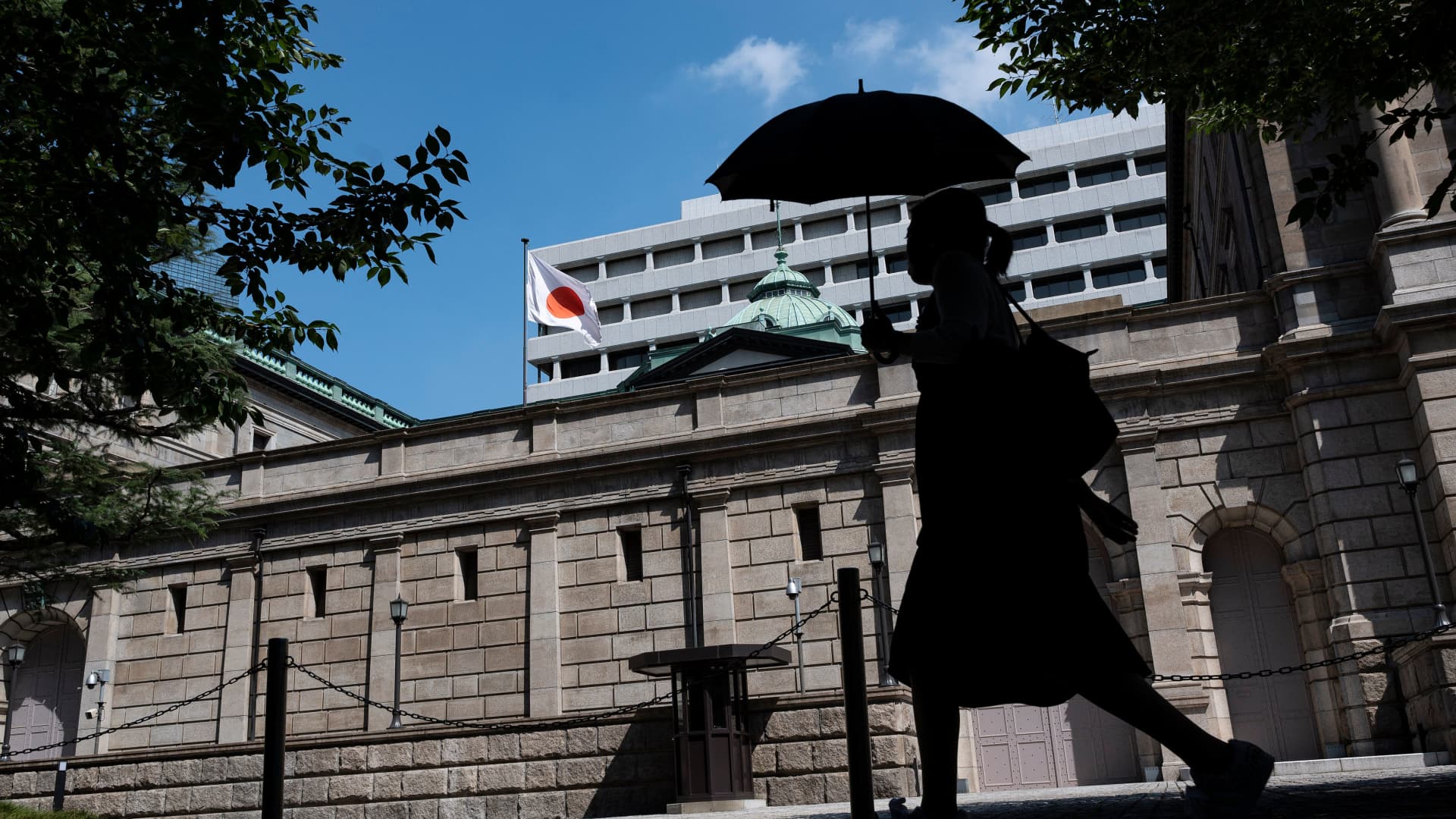
A pedestrian walks past the Bank of Japan (BoJ) building in central Tokyo on July 28, 2023. Richard A. Brooks | Afp | Getty Images
Japan’s central bank on Tuesday announced it would slow the pace of government bond purchases starting in April next year, while maintaining the benchmark rate at 0.5% amidst rising growth risks. The Bank of Japan, aligning its rate decision with expectations from economists, reiterated plans to reduce its monthly purchases of Japanese government bonds by about 400 billion yen ($2.76 billion) per quarter to approximately 3 trillion yen until March 2026, as detailed in its previous plan.
From April 2026 to March 2027, the cuts will slow to 200 billion yen per quarter, aiming for a monthly purchase amount of around 2 trillion yen. An interim assessment is scheduled for the BOJ’s monetary policy meeting in June 2026. The central bank clarified that this strategy is intended to enhance “the functioning of the JGB markets in a manner that supports stability in the markets.” It is projected to purchase about 4.1 trillion yen of JGBs monthly during the quarter ending June 2025.
HSBC Global Research mentioned that the 2 trillion yen figure represents a “natural” level, highlighting that it aligns with the monthly JGB purchases made by the BOJ prior to the onset of its ultraloose monetary policy in April 2013.
Although the bank has indicated a reduction in cuts to bond purchases, BOJ Governor Kazuo Ueda recently informed Japan’s parliament that the central bank plans to raise rates “once we have more conviction that underlying inflation will approach 2% or hover around that level.” Japan’s economy is facing growth uncertainty as inflation has remained above the BOJ’s target for about three years. The bank noted that Japan’s economic growth is likely to “moderate,” suggesting that factors such as trade could cause a slowdown in overseas economies and a decrease in domestic corporate profits.
The central bank anticipates that accommodative financial conditions will offer support. Inflation in Japan has remained elevated, partially due to a rice shortage, which has driven prices up; the government is releasing emergency stockpiles to mitigate this issue. The country’s headline inflation rate for April stood at 3.6%, marking over three years of inflation exceeding the BOJ’s 2% target.
Japan’s GDP also contracted by 0.2% in the quarter that ended in March compared to the previous period, reflecting a decline in exports and marking the first quarter-on-quarter contraction in a year.


