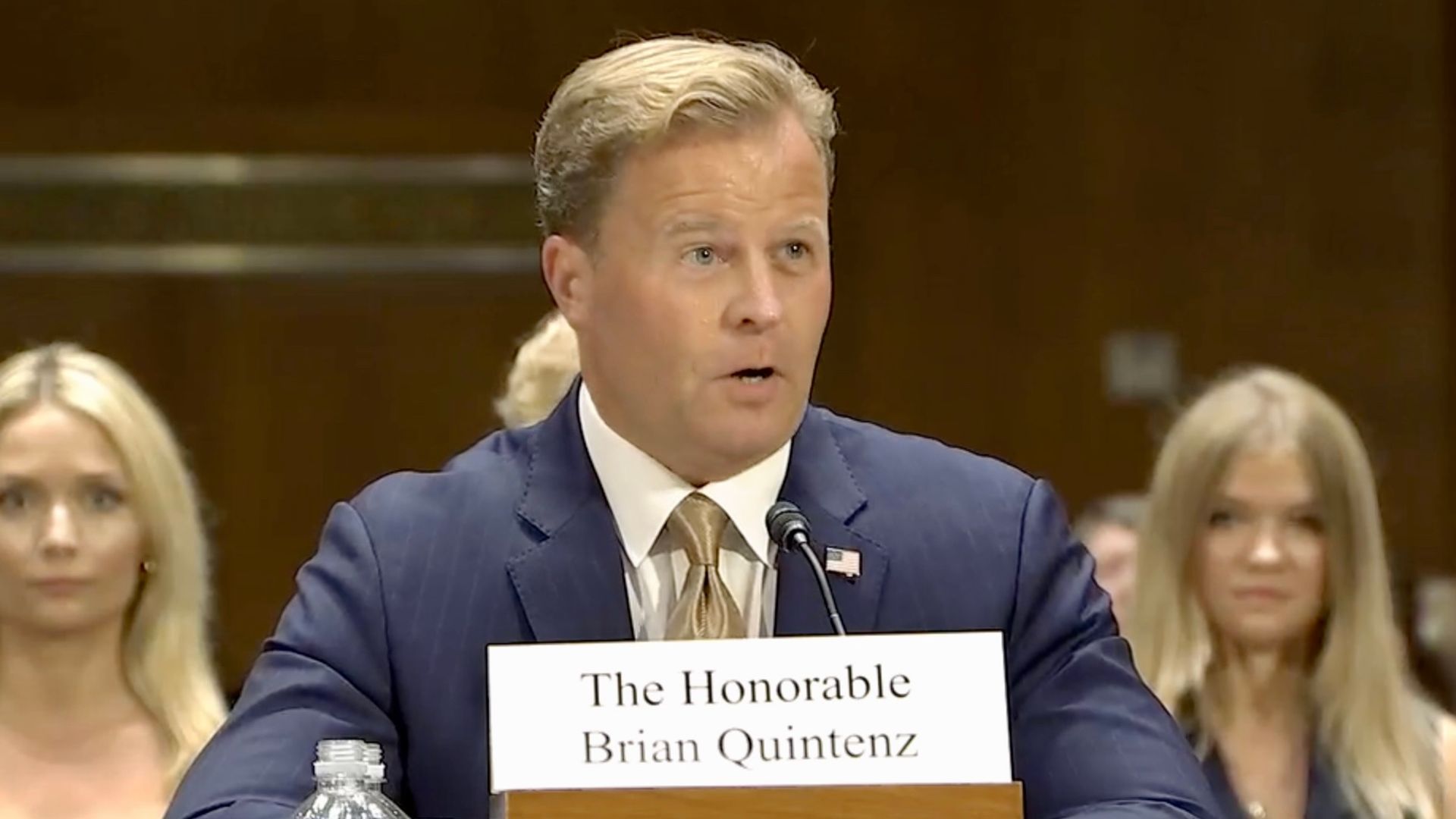
Quintenz, Trump’s Choice for Possible U.S. Crypto Regulator, Postponed by White House
Brain Quintenz, nominated by President Donald Trump to lead the Commodity Futures Trading Commission (CFTC), which is expected to become the primary U.S. regulator for cryptocurrencies, has encountered delays in the confirmation process initiated by the White House. Quintenz was scheduled for a crucial sign-off from the Senate Agriculture Committee on Monday before advancing to a full Senate vote, but the administration intervened, marking the second delay in his process since last week. “The White House asked the committee to delay the vote,” staff from the committee stated in an email. The White House did not provide an immediate comment, leaving the reasons for the delay and the future of Quintenz’s nomination uncertain.
The committee was prepared to vote on the former CFTC commissioner’s nomination on Monday afternoon, but this last-minute change halted his progression. Quintenz’s initial committee vote had already been postponed from last week with little notice, complicating his effort to clear this essential hurdle before the broader Senate vote. With the Senate set to begin its August recess next week, any pending personnel approvals, including Quintenz’s, may face further delays, placing the CFTC in a precarious position amidst an already fragile leadership scenario.
Quintenz was intended to lead the agency at a time when Congress is considering legislation aimed at empowering the CFTC to regulate a significant portion of the U.S. crypto markets, including bitcoin (BTC) trading. Currently, the CFTC is led by Commissioner Caroline Pham, a Republican who was appointed as acting chair by Trump, but she plans to depart once her permanent successor is confirmed. Additionally, her fellow Republicans have already left.
Should Pham leave before or shortly after a new Republican chair arrives, and if confirmed, Quintenz could find himself as the only member of the five-person commission. President Trump has been actively working to reshape the leadership within executive agencies by removing Democratic members, notwithstanding the existing rules that dictate a bipartisan composition for these commissions. The ongoing transitions at the CFTC are progressing without direct intervention from Trump; however, some observers are questioning the legal standing of policies that may be enacted by a single-member commission.
Nevertheless, a chairman for the CFTC must first be officially confirmed. Much of Trump’s team of financial regulators has been appointed, including Securities and Exchange Commission Chairman Paul Atkins. The House of Representatives recently approved the Digital Asset Market Clarity Act with a strong bipartisan majority, a bill aimed at regulating U.S. crypto markets by designating the CFTC as the regulatory authority for spot trading of digital assets that are not classified as securities. Meanwhile, the Senate is developing its own version of the legislation, with Senate Banking Committee Chairman Tim Scott establishing a September 30 deadline for completion, although the Senate Agriculture Committee’s approval is also required, casting some uncertainty on this expedited timeline.
UPDATE (July 28, 2025, 23:17 UTC): Adds committee comment on White House request for delay.


