Creating a Cutting-Edge Dataset for Brain Activity Research: Our Journey
For almost a decade, Michał Januszewski has been contemplating what fish might be thinking. Michał is part of Google Research, collaborating with teams at HHMI Janelia and Harvard University to develop one of the most ambitious datasets in brain activity research: a dataset that tracks both the neural activity and nanoscale structure of an entire larval zebrafish brain — potentially leading to significant breakthroughs in our understanding of the human brain.
“For years, our team has focused on what’s called connectomics, which involves the structural mapping of brains,” Michał explains. “We capture very high-resolution images of small brain fragments and aim to identify all cells and connections between them. This gives us a static snapshot of the brain at a specific moment in time, but it doesn’t reveal what the brain is doing while it’s alive and functioning.”
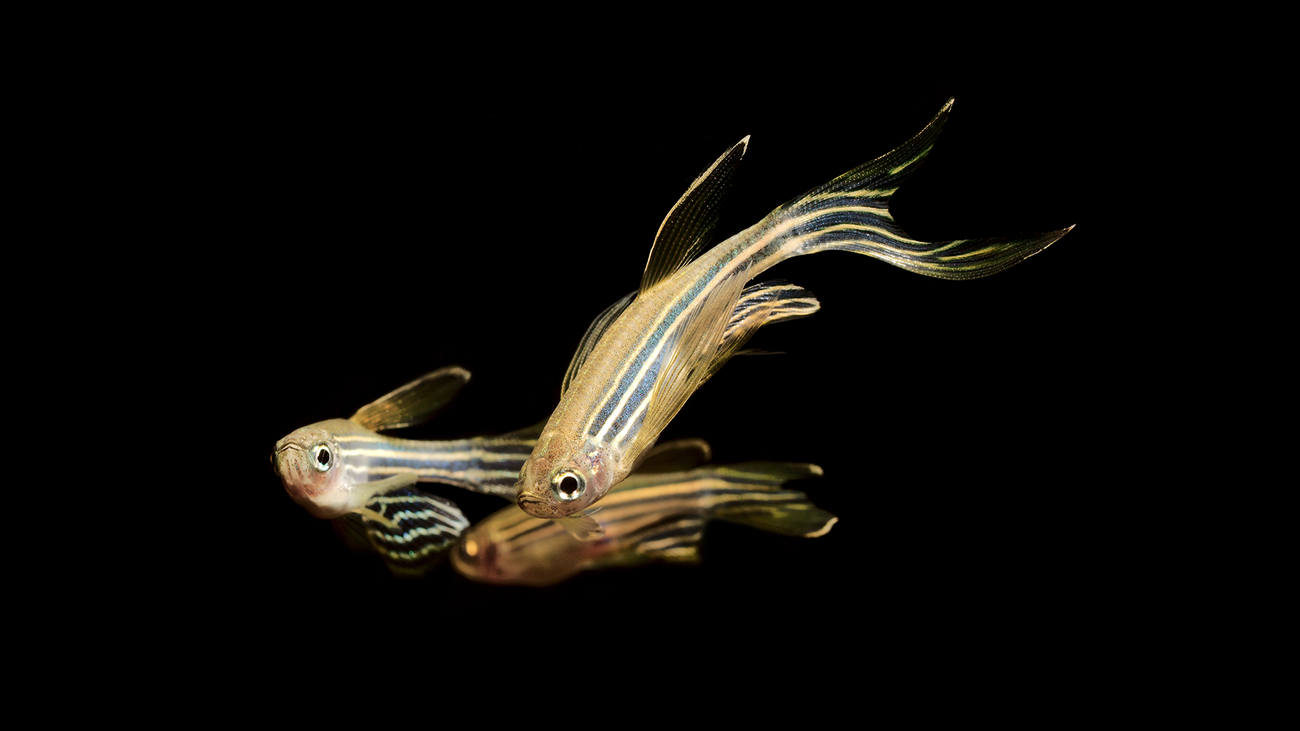
To address this gap, Michał’s team sought to create a new, multimodal dataset that could predict and illustrate the neural activity of an organism during cognitive processes. They chose the zebrafish for several reasons: it is a vertebrate with more complex brain functions than an insect, and its small size allows the team to obtain a dataset of the entire brain, rather than just a small part. Most importantly, newly hatched zebrafish are nearly transparent, enabling the team to use a specialized laser rig to scan almost two hours of brain activity from over 70,000 neurons in a live fish’s brain as it responds to various patterns and stimuli.
In April, Google Research introduced this data as ZAPBench (Zebrafish Activity Prediction Benchmark), a pioneering benchmark that can accelerate advancements in neuroscience by facilitating the development of more accurate AI models for predicting brain activity.


